
乳腺筛查读片为阴性后,按 AI 评分挑选少数人加做磁共振,559 次检查又发现 36 例癌
Nature Medicine2024随机对照试验Crossref 记录被引 95 次
磁共振名额有限,筛查阴性的人中该优先查谁?
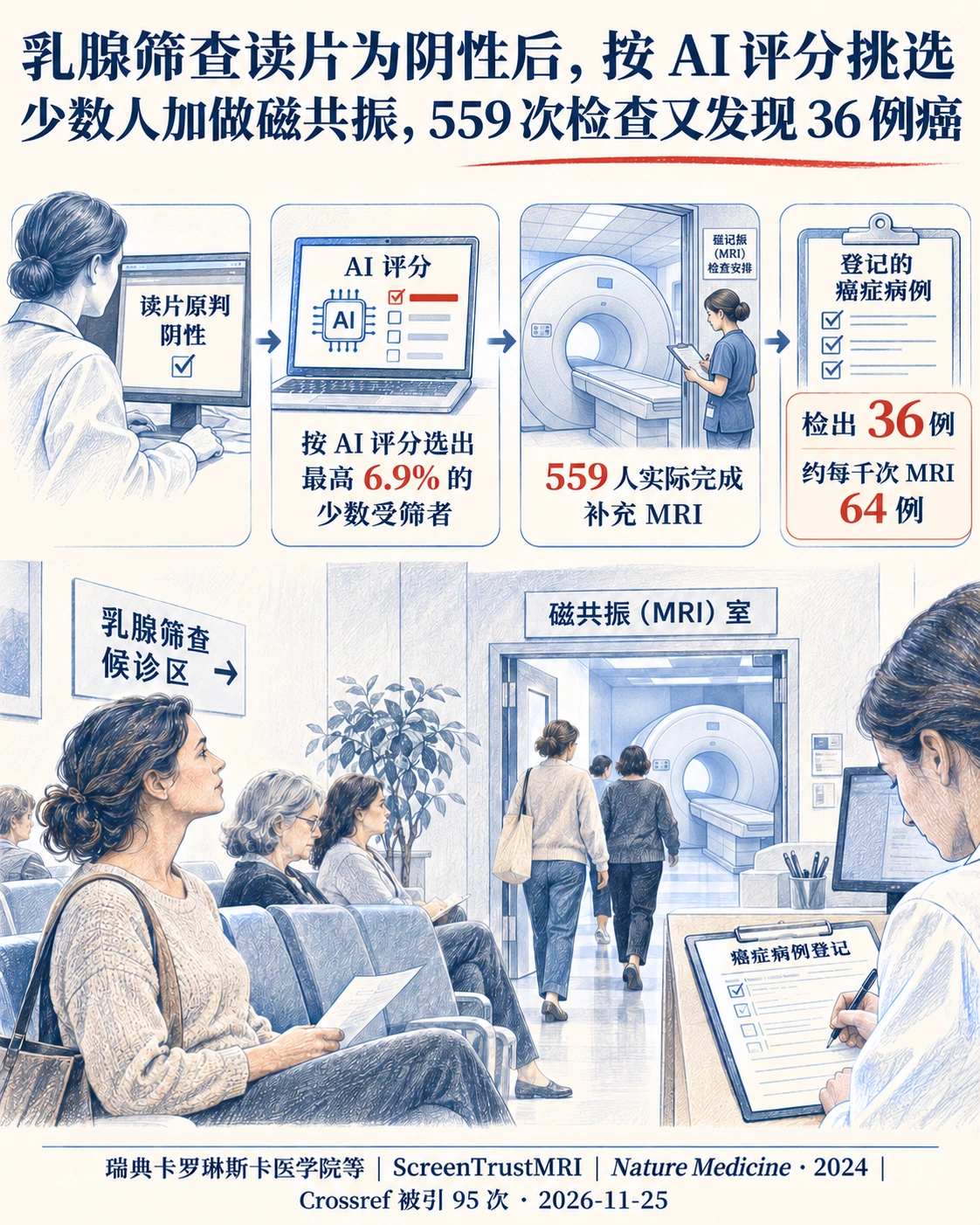
在乳腺筛查读片为阴性、但 AI 评分位居最高 6.9% 的人群中,559 人实际完成补充磁共振检查,检出 36 例癌。相当于每千次补充 MRI 检出约 64 例。
推荐阅读的理由
补充磁共振能找到乳腺 X 线检查遗漏的病灶,但很难给每位筛查阴性者都安排。作者把 AI 用在选择复查对象这一步。读这篇论文时,要问每做一次补充检查能找到多少癌,而降低晚期癌的效果要等试验的主要终点。
AI-based selection of individuals for supplemental MRI in population-based breast cancer screening: the randomized ScreenTrustMRI trial
作者摘要 · 中文编译
作者摘要 乳腺 X 线筛查能够检出乳腺癌,但仍会漏掉一些病例。补充磁共振可以减少漏检,然而人员、设备和成本限制了其使用。研究者在 ScreenTrustMRI 随机试验中用 AI 工具给乳腺影像评分,向筛查阴性且评分最高的 6.9% 人群发出邀请,同意者随机分到补充 MRI 或不做补充 MRI。主要终点为初筛后随访 27 个月的进展期乳腺癌,包括间期癌、有超过 15 毫米的浸润成分或淋巴结阳性的癌。本篇按方案提前报告次要终点,即补充 MRI 额外发现多少癌。
结果与解释 按每千次 MRI 检出癌症数衡量,AI 筛选法的数值接近先前按传统乳腺密度选择受检者试验的四倍(64 对 16.5)。额外检出的癌大多为浸润性,一些为多灶性,作者认为在此时发现它们具有意义。这种方法在筛查阴性者中只选择一小部分进行 MRI,却能检出许多遗漏的癌;作者估算每检出一例癌的成本与乳腺 X 线筛查相当。注册号 NCT04832594。
展开英文原摘要收起英文原摘要Screening mammography reduces breast cancer mortality, but studies analyzing interval cancers diagnosed after negative screens have shown that many cancers are missed. Supplemental screening using magnetic resonance imaging (MRI) can reduce the number of missed cancers. However, as qualified MRI staff are lacking, the equipment is expensive to purchase and cost-effectiveness for screening may not be convincing, the utilization of MRI is currently limited. An effective method for triaging individuals to supplemental MRI screening is therefore needed. We conducted a randomized clinical trial, ScreenTrustMRI, using a recently developed artificial intelligence (AI) tool to score each mammogram. We offered trial participation to individuals with a negative screening mammogram and a high AI score (top 6.9%). Upon agreeing to participate, individuals were assigned randomly to one of two groups: those receiving supplemental MRI and those not receiving MRI. The primary endpoint of ScreenTrustMRI is advanced breast cancer defined as either interval cancer, invasive component larger than 15 mm or lymph node positive cancer, based on a 27-month follow-up time from the initial screening. Secondary endpoints, prespecified in the study protocol to be reported before the primary outcome, include cancer detected by supplemental MRI, which is the focus of the current paper. Compared with traditional breast density measures used in a previous clinical trial, the current AI method was nearly four times more efficient in terms of cancers detected per 1,000 MRI examinations (64 versus 16.5). Most additional cancers detected were invasive and several were multifocal, suggesting that their detection was timely. Altogether, our results show that using an AI-based score to select a small proportion (6.9%) of individuals for supplemental MRI after negative mammography detects many missed cancers, making the cost per cancer detected comparable with screening mammography. ClinicalTrials.gov registration: NCT04832594.
Screening mammography reduces breast cancer mortality, but studies analyzing interval cancers diagnosed after negative screens have shown that many cancers are missed. Supplemental screening using magnetic resonance imaging (MRI) can reduce the number of missed cancers. However, as qualified MRI staff are lacking, the equipment is expensive to purchase and cost-effectiveness for screening may not be convincing, the utilization of MRI is currently limited. An effective method for triaging individuals to supplemental MRI screening is therefore needed. We conducted a randomized clinical trial, ScreenTrustMRI, using a recently developed artificial intelligence (AI) tool to score each mammogram. We offered trial participation to individuals with a negative screening mammogram and a high AI score (top 6.9%). Upon agreeing to participate, individuals were assigned randomly to one of two groups: those receiving supplemental MRI and those not receiving MRI. The primary endpoint of ScreenTrustMRI is advanced breast cancer defined as either interval cancer, invasive component larger than 15 mm or lymph node positive cancer, based on a 27-month follow-up time from the initial screening. Secondary endpoints, prespecified in the study protocol to be reported before the primary outcome, include cancer detected by supplemental MRI, which is the focus of the current paper. Compared with traditional breast density measures used in a previous clinical trial, the current AI method was nearly four times more efficient in terms of cancers detected per 1,000 MRI examinations (64 versus 16.5). Most additional cancers detected were invasive and several were multifocal, suggesting that their detection was timely. Altogether, our results show that using an AI-based score to select a small proportion (6.9%) of individuals for supplemental MRI after negative mammography detects many missed cancers, making the cost per cancer detected comparable with screening mammography. ClinicalTrials.gov registration: NCT04832594.
Mattie Salim, Yue Liu, Moein Sorkhei, Dimitra Ntoula, Theodoros Foukakis, Irma Fredriksson, Yanlu Wang, Martin Eklund, Hossein Azizpour, Kevin Smith, Fredrik Strand
© The Author(s) 2024
经过选择的补充磁共振,检出率怎样?
| 指标 | 结果 |
|---|---|
| 筛查人群/符合高分门槛 | 59,354 人/4,103 人(6.9%) |
| 随机分到 MRI/实际完成 | 663 人/559 人 |
| 发现乳腺癌 | 36 例 |
| 每 1,000 次补充 MRI 的检出数 | 64.4(95% 置信区间 46.8 至 88.1) |
高分、获邀、同意参加、随机分配和完成检查是不同步骤,36 例来自完成检查的 559 人。 核对作者图表
作者的结论
作者认为,从筛查阴性者中按 AI 评分挑出一小群人补做 MRI,能发现相当数量的漏检癌。论文报告的是预先指定的次要终点,主要终点是 27 个月随访的进展期乳腺癌。
研究团队与论文影响
瑞典卡罗琳斯卡医学院及卡罗琳斯卡大学医院等开展 ScreenTrustMRI 随机试验,注册号 NCT04832594。本篇报告实际完成补充 MRI 的人群。
Crossref 收录本文引用 95 次。出版商统计本文访问约 3.8 万次。
单篇与期刊指标核查于 。
原文与延伸阅读
引用这篇文章与反馈纠错
研象编辑部.乳腺筛查读片为阴性后,按 AI 评分挑选少数人加做磁共振,559 次检查又发现 36 例癌[EB/OL].研象,2026-11-25.https://yanxiang.hk/papers/screentrustmri-ai-negative-mammogram
发现数字、译文或出处有误,可以在邮件里指出相应段落,附上核对依据。