
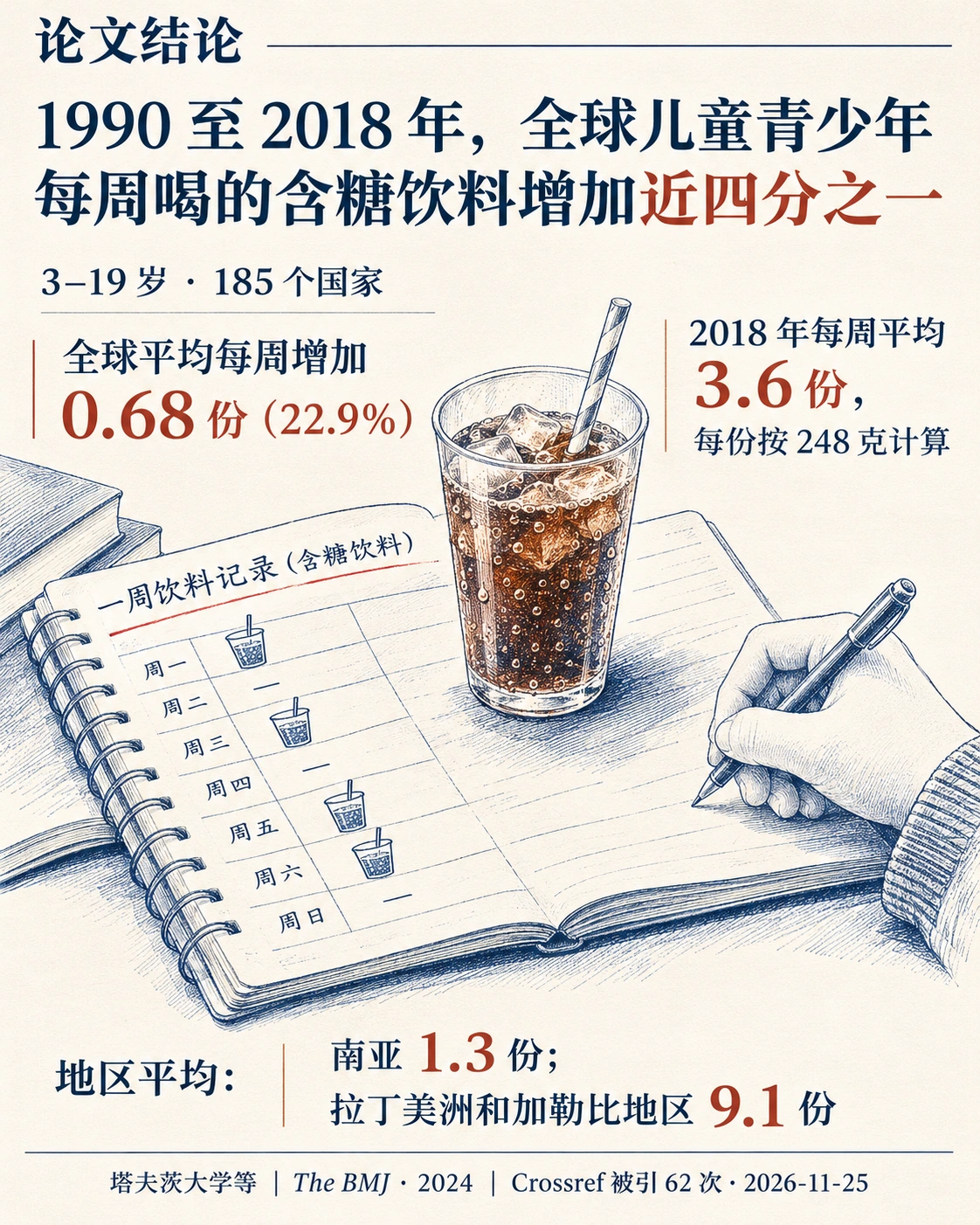
1990 至 2018 年,全球儿童青少年每周喝的含糖饮料增加近四分之一
The BMJ2024人群负担估计Crossref 记录被引 62 次
哪里喝得最多,哪里增长最快?
1990 至 2018 年,全球 3 至 19 岁儿童青少年平均每周多喝 0.68 份含糖饮料,增幅约 23%。2018 年拉丁美洲及加勒比地区的周均摄入为 9.1 份,南亚为 1.3 份;增长最快的是撒哈拉以南非洲。
推荐阅读的理由
给学校或城市做营养政策,这两个问题会指向不同的地方。作者把各地调查换算为同样大小的一份饮料,再按年龄、居住地和家长教育程度比较。拉丁美洲及加勒比地区当前摄入最高,而撒哈拉以南非洲的周均摄入在观察期内翻了一倍多。
Intake of sugar sweetened beverages among children and adolescents in 185 countries between 1990 and 2018: population based study
作者摘要 · 中文编译
目的与设计 这项人群研究使用全球饮食数据库,量化儿童青少年含糖饮料摄入量及其时间变化。分析覆盖 1990 至 2018 年 185 个国家的 3 至 19 岁人群,在国内同时按年龄、性别、家长教育程度及城乡分层。
结果 2018 年全球人均每周摄入 3.6 标准份,每份 248 克(8 盎司)。地区范围从南亚的 1.3 份(95% 不确定区间 1.0 至 1.9)到拉丁美洲和加勒比地区的 9.1 份(8.3 至 10.1)。年龄较大、住在城市或家长受教育程度较高的人群摄入更多。1990 至 2018 年全球每周平均增加 0.68 份(22.9%),撒哈拉以南非洲增加最多,为 2.17 份(106%)。185 国中有 56 国(30.3%)平均每周至少 7 份,这些国家共有 2.38 亿名儿童青少年,占全球年轻人口的 10.4%。
结论 上述 28 年间,儿童青少年的含糖饮料摄入增加约 23%,同时全球这一人群的肥胖率也在上升。地区、年龄、家长教育和城乡之间存在明显差异。研究可为减少年轻人含糖饮料摄入的政策提供参考,尤其应关注拉丁美洲和加勒比地区城乡各教育层次的高摄入,以及撒哈拉以南非洲不断增长的公共卫生挑战。
展开英文原摘要收起英文原摘要To quantify global intakes of sugar sweetened beverages (SSBs) and trends over time among children and adolescents. Population based study. Global Dietary Database. Children and adolescents aged 3-19 years in 185 countries between 1990 and 2018, jointly stratified at subnational level by age, sex, parental education, and rural or urban residence. In 2018, mean global SSB intake was 3.6 (standardized serving=248 g (8 oz)) servings/week (1.3 (95% uncertainly interval 1.0 to 1.9) in south Asia to 9.1 (8.3 to 10.1) in Latin America and the Caribbean). SSB intakes were higher in older versus younger children and adolescents, those resident in urban versus rural areas, and those of parents with higher versus lower education. Between 1990 and 2018, mean global SSB intakes increased by 0.68 servings/week (22.9%), with the largest increases in sub-Saharan Africa (2.17 servings/week; 106%). Of 185 countries included in the analysis, 56 (30.3%) had a mean SSB intake of ≥7 servings/week, representing 238 million children and adolescents, or 10.4% of the global population of young people. This study found that intakes of SSBs among children and adolescents aged 3-19 years in 185 countries increased by 23% from 1990 to 2018, parallel to the rise in prevalence of obesity among this population globally. SSB intakes showed large heterogeneity among children and adolescents worldwide and by age, parental level of education, and urbanicity. This research should help to inform policies to reduce SSB intake among young people, particularly those with larger intakes across all education levels in urban and rural areas in Latin America and the Caribbean, and the growing problem of SSBs for public health in sub-Saharan Africa.
Objective · To quantify global intakes of sugar sweetened beverages (SSBs) and trends over time among children and adolescents.
Design · Population based study.
Setting · Global Dietary Database.
Population · Children and adolescents aged 3-19 years in 185 countries between 1990 and 2018, jointly stratified at subnational level by age, sex, parental education, and rural or urban residence.
Results · In 2018, mean global SSB intake was 3.6 (standardized serving=248 g (8 oz)) servings/week (1.3 (95% uncertainly interval 1.0 to 1.9) in south Asia to 9.1 (8.3 to 10.1) in Latin America and the Caribbean). SSB intakes were higher in older versus younger children and adolescents, those resident in urban versus rural areas, and those of parents with higher versus lower education. Between 1990 and 2018, mean global SSB intakes increased by 0.68 servings/week (22.9%), with the largest increases in sub-Saharan Africa (2.17 servings/week; 106%). Of 185 countries included in the analysis, 56 (30.3%) had a mean SSB intake of ≥7 servings/week, representing 238 million children and adolescents, or 10.4% of the global population of young people.
Conclusion · This study found that intakes of SSBs among children and adolescents aged 3-19 years in 185 countries increased by 23% from 1990 to 2018, parallel to the rise in prevalence of obesity among this population globally. SSB intakes showed large heterogeneity among children and adolescents worldwide and by age, parental level of education, and urbanicity. This research should help to inform policies to reduce SSB intake among young people, particularly those with larger intakes across all education levels in urban and rural areas in Latin America and the Caribbean, and the growing problem of SSBs for public health in sub-Saharan Africa.
Laura Lara-Castor, Renata Micha, Frederick Cudhea, Victoria Miller, Peilin Shi, Jianyi Zhang, Julia R Sharib, Josh Erndt-Marino, Sean B Cash, Simon Barquera, Dariush Mozaffarian, Global Dietary Database
© Author(s) (or their employer(s)). Published by BMJ.
同样一份饮料,按周计算可看出哪些差别?
| 人群或地区 | 周均量及变化 |
|---|---|
| 2018 年全球 | 3.6 份(95% 不确定区间 3.3 至 4.0) |
| 2018 年南亚 | 1.3 份(1.0 至 1.9) |
| 2018 年拉丁美洲与加勒比地区 | 9.1 份(8.3 至 10.1) |
| 撒哈拉以南非洲,1990 至 2018 年 | 增加 2.17 份,增幅 106% |
2018 年有 56 个国家的平均摄入达到每周 7 份,不能据此断定这些国家的每个孩子每天都喝一份。 核对作者图表
作者的结论
作者认为,全球年轻人饮用含糖饮料的量有所上升,不同地区和人群间差异很大。政策既应关注长期高摄入地区,也应关注摄入快速增长的地区。
研究团队与论文影响
美国塔夫茨大学弗里德曼营养科学与政策学院等基于全球饮食数据库分析。这项发表于 The BMJ 的研究用 450 项膳食调查建立模型,对 185 个国家的年轻人给出可比估计。
Crossref 收录本文引用 62 次。
单篇与期刊指标核查于 。
原文与延伸阅读
引用这篇文章与反馈纠错
研象编辑部.1990 至 2018 年,全球儿童青少年每周喝的含糖饮料增加近四分之一[EB/OL].研象,2026-11-25.https://yanxiang.hk/papers/global-sugary-drinks-children
发现数字、译文或出处有误,可以在邮件里指出相应段落,附上核对依据。